

This tool gathers detailed nutritional information on 850 products from 42 brands available in the main supermarkets in Spain. Its aim is to provide dietetics, nutrition, paediatrics and other health professionals with a reliable and updated source of information about the composition of these foods. This allows them to accurately assess nutrition during the first years of life and offer recommendations that promote a healthier and more sustainable diet. In addition, the results can serve as a basis for designing more effective food and regulatory policies.
According to Nancy Babio, researcher at the Human Nutrition Unit of the URV and coordinator of the project, “this database is a key step to provide health professionals with objective and evidence‑based information, in a context where the offer of commercial products for young children is growing quickly and does not always follow public health criteria”.
The results of the analysis, published in the scientific journal European Journal of Pediatrics, show worrying data. Besides confirming that only 20% of the products analysed meet all the nutritional profile and advertising criteria recommended by the WHO, it also warns that 60% of the food contains excessive amounts of sugar, and 99% of fruit purées would require a “high in sugar” warning label. In fact, none of the foods analysed should be advertised according to WHO guidelines.
The analysis also shows that 30% of the products include added sugars or sweeteners, such as honey or concentrated juices, and that none of the products meet all the WHO criteria for commercial promotion. Moreover, 98% display unauthorised claims or promotional messages.
“These results highlight the urgent need to improve regulation, both in the formulation and in the advertising of foods aimed at young children. At the moment, this is governed by a co‑regulation code (PAOS) that is not legally binding and has not worked as expected,” warns Roser Martí, president of CODINUCAT.
The Baby & Toddler Food Composition Database – InfantBase is a tool designed both for professional use and for political decision‑making.
This tool is part of the PRINUT project (Early Childhood: Nutritional Analysis and Regulation of Commercial Foods), which is aligned with public health strategies aimed at promoting healthy and safe eating during early childhood, following WHO recommendations and the PAAS (Comprehensive Plan for Health Promotion through Physical Activity and Healthy Eating) of the Government of Catalonia.
“As scientists and health professionals, we believe we have the responsibility to translate scientific evidence into effective policies that protect children’s health. We hope to receive institutional support to move forward in this direction,” concludes Babio.
A study led by URV also concludes that there is still insufficient evidence to confirm that this diet improves the outcomes of assisted reproductive treatments

Infertility affects one in six adults worldwide and has been recognized by the World Health Organization (WHO) as a public health issue. Several studies conducted on men in developed countries have raised concerns about a decline in semen quality, potentially linked to unhealthy lifestyle habits. Stress, smoking, alcohol consumption, drug use, and poor dietary choices are among the main risk factors associated with reduced sperm quality.
The analysis encompassed 11 original studies involving a total of 2,558 men, examining the association between adherence to the Mediterranean diet—rich in fruits, vegetables, olive oil, fish, nuts, and whole grains—semen quality, and/or various fertility parameters.
The findings revealed that men who closely followed this dietary pattern had a higher sperm count, with improved total and progressive motility, as well as a greater proportion of sperm with normal morphology. These results were observed both in healthy individuals and in patients attending fertility clinics.
However, the authors caution that, although semen quality was superior among participants with greater adherence to the Mediterranean diet, there is still no conclusive evidence that this diet directly enhances outcomes in medically assisted reproduction.
“While the Mediterranean diet appears to have a positive effect on semen quality, further research is needed to determine its actual impact on male fertility,” the research team noted.
The study’s findings form part of Rashmi Agarwal’s doctoral thesis, supervised by Albert Salas-Huetos, lecturer at URV; Nancy Babio, associate professor at the university; and Jordi Salas-Salvadó, professor and head of the Food, Nutrition, Development and Mental Health research group at URV, the Institut Sanitari Pere Virgili (IISPV), and CIBERobn at the Instituto de Salud Carlos III.
Bibliographic reference: Agarwal R, Salas-Salvadó J, Davila-Cordova E, Shyam S, Fernàndez de la Pont M, Azurmendi M, Bavi N, and Salas-Huetos A. Mediterranean diet, semen quality and medically assisted reproductive outcomes in the male population. 2025; 100454. doi: 10.1016/j.advnut.2025.100454
A URV-IISPV-CIBEROBN study warns that 80% of children’s products are not nutritionally adequate and should not be promoted
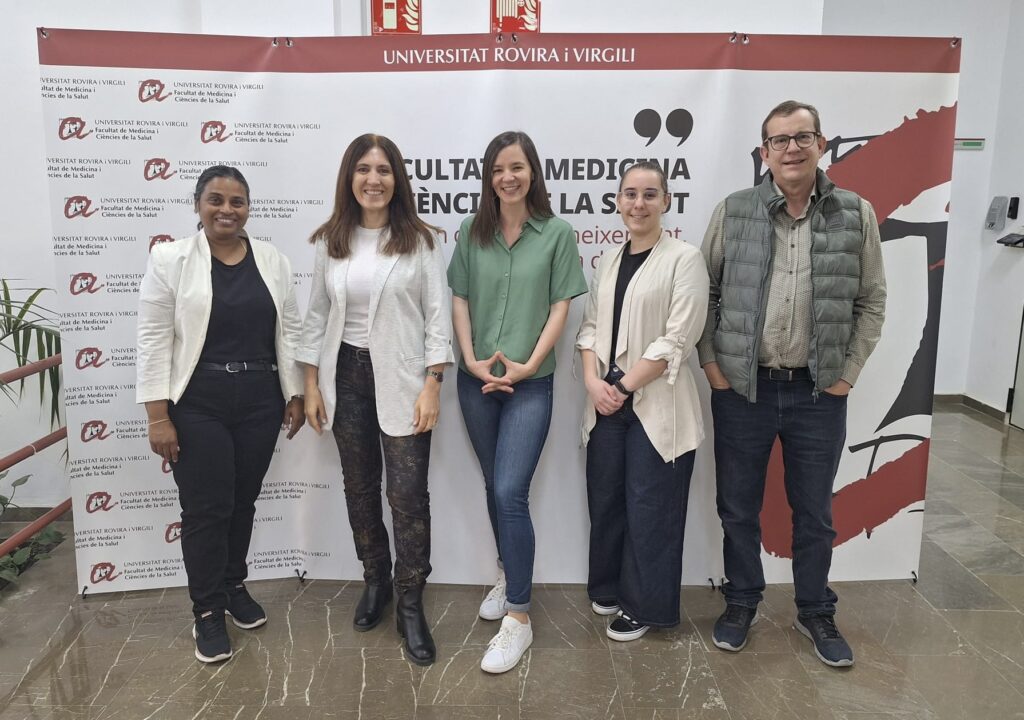
Most foods for children under three years of age marketed in Spain are of low nutritional quality and do not meet the standards set by the World Health Organization (WHO). This is indicated by a study led by the Rovira i Virgili University (URV) together with the Pere Virgili Health Research Institute (IISPV) and the CIBER of Obesity and Nutrition (CIBEROBN), which warns that these products should not be promoted for sale.
To carry out the study, which has been published in the European Journal of Pediatrics, more than 800 products were analyzed, including purees, dairy products, snacks and beverages. The research team detected repetitive nutritional problems in these foods, such as a high content of added sugars -often in the form of concentrated juices-, low caloric intake and low energy density. In addition, many of the product labels analyzed were the result of marketing strategies that were misleading because they showed confusing product names, such as “veal with carrots”, in cases where veal was a minority ingredient. They also found food packaging with messages such as “no added sugars” and even with unscientific health claims.
“Many of these products generate a false perception of quality, when in fact they are not suitable according to WHO for the healthy development of children,” warns Paulina Maria Leszczynska, first author of the study.
“No podemos permitir que los intereses comerciales prevalezcan sobre la salud infantil. Es imprescindible contar con una normativa clara, vinculante y basada en evidencias científicas que proteja a la población más pequeña”, advierte Nancy Babio, investigadora del Departamento de Bioquímica y Biotecnología de la URV e investigadora principal del proyecto.
Stopped regulation
Currently, food advertising in Spain is governed by the PAOS Code, a voluntary self-regulation system with no sanctioning mechanisms. In 2022 the Ministry of Consumer Affairs proposed a Royal Decree to regulate the advertising of food and beverages aimed at children, using the WHO criteria as a basis, but the processing of the text is still blocked pending approval by the Council of Ministers.
In view of these facts, the research team has called on the Government to approve without further delay the Royal Decree regulating the advertising of baby food and to prohibit the promotion of products that are not suitable for children under 3 years of age, especially those with excessive sugar or misleading claims.
The work has been carried out by the dietitian-nutritionist Paulina Maria Leszczyńska and the research team of the Department of Biochemistry and Biotechnology of the URV Sara de Heras-Delgado, Sangeetha Shyam, Jordi Salas-Salvadó and Nancy Babio, which is also part of the IISPV and CIBEROBN. The study has counted with Diane Threapleton and Janet Cade, from the University of Leeds, authors of the Nutrient and Promotion Profile Model Calculator tool, used to evaluate the nutritional and promotional performance of children’s products according to the WHO model.
Bibliographic Reference: Leszczyńska PM, de Las Heras-Delgado S, Shyam S, Threapleton D, Cade J, Salas-Salvadó J, Babio N. Nutricional contento y promocionar prácticas de foods para niños y jóvenes en el español mercado: en el cross-sectional product evaluation. Eur J Pediatr. 2025 May 10;184(6):333. doi: 10.1007/s00431-025-06156-y. PMID: 40347273; PMCID: PMC12065749.