

For people who smoke 20 or more cigarettes a day, the risk doubles. These are the findings of a study led by the Human Nutrition Unit at URV.
Smoking significantly increases the risk of developing type 2 diabetes. However, drinking alcohol—even in small amounts—does not offer any protection against this disease, despite what some previous studies suggested. This has been confirmed by a new international study led by Indira Paz-Graniel, a researcher at the Human Nutrition Unit of Universitat Rovira i Virgili (URV), in collaboration with the Nutritional Epidemiology Research team from Université Sorbonne Paris Nord (France).
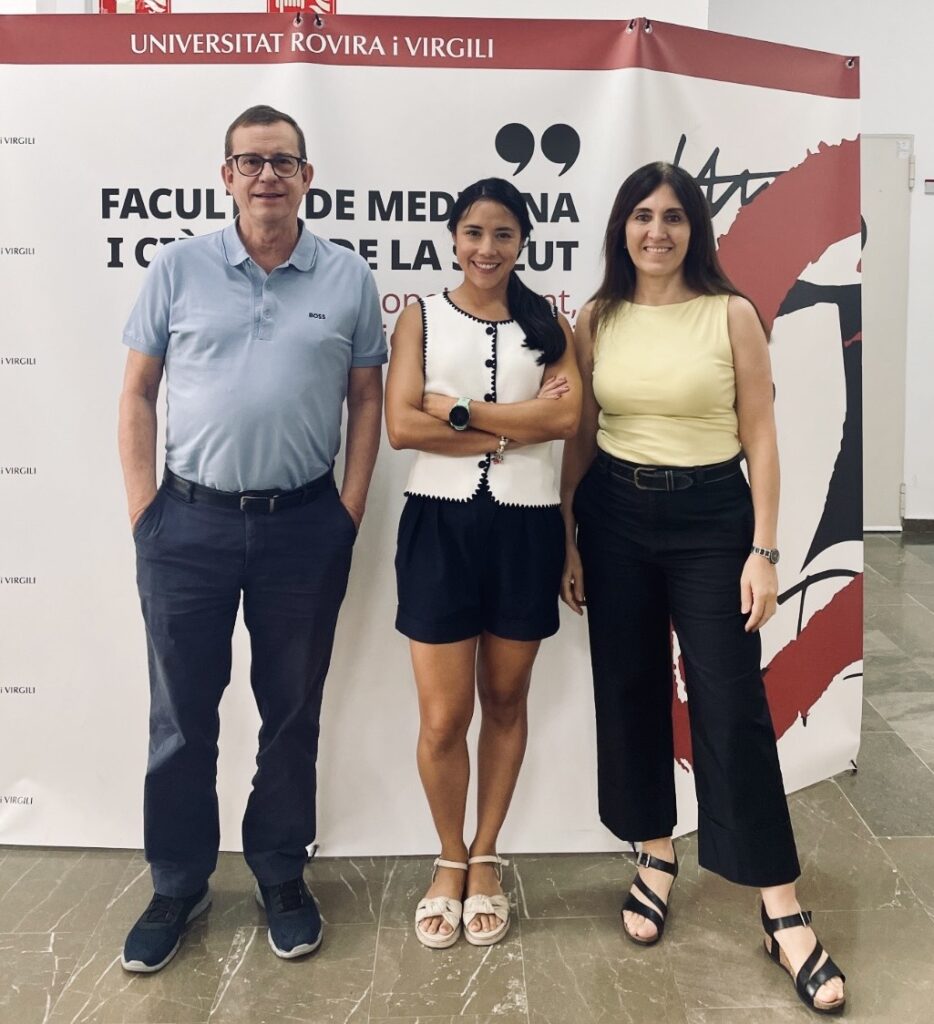
The research studied the combined effects of tobacco and alcohol on the development of type 2 diabetes, a topic that had not been explored much until now. The goal was to find out whether both habits, beyond their individual impact, could have a combined effect on the risk of getting the disease.
To do this, data from more than 110,000 participants in the NutriNet-Santé cohort—one of the largest public health studies in Europe—were used. Over an average follow-up of 7.5 years, 1,175 new cases of type 2 diabetes were diagnosed.
The results show that people who smoke or have smoked at some point have a 25% higher risk of developing type 2 diabetes compared to those who have never smoked. The risk is especially high for those who smoke 20 or more cigarettes a day, as they are twice as likely to develop the disease compared to light or moderate smokers.
The research team also found that low or moderate alcohol consumption was not linked to any protective effect against type 2 diabetes. These findings go against previous studies that suggested drinking one glass of wine a day—or the equivalent—could reduce the risk of developing the disease.
When the combined use of tobacco and alcohol was analyzed, no additional increase in risk was found. This suggests that, at least in the studied population, both habits do not act together to raise the risk of diabetes.
“We know that smoking is a clear risk factor, but we were surprised to see that alcohol alone did not change the risk of diabetes,” said Indira Paz-Graniel. However, she warned that the results should be interpreted with caution, since the NutriNet-Santé cohort is mostly made up of women with a high level of education and healthy lifestyles. “More studies in diverse populations are needed to better understand the interaction between alcohol and nicotine,” she added.
The study also included Professor Jordi Salas-Salvadó, director of the Human Nutrition Unit at URV, and Professor Nancy Babio. Both are members of CIBERobn and the Pere Virgili Health Research Institute (IISPV), along with the lead researcher.
The results were published in the American Journal of Preventive Medicine (August 2025) and presented at the International Congress of Nutrition organized by the International Union of Nutritional Sciences (IUNS), recently held in Paris.
Reference: Paz-Graniel I, Kose J, Duquenne P, et al. Alcohol, smoking and their synergy as risk factors for incident Type 2 Diabetes. American Journal of Preventive Medicine. 2025 Jul 31:108011. doi:10.1016/j.amepre.2025.108011
The unit’s objective is to provide an in-depth understanding of flow cytometry
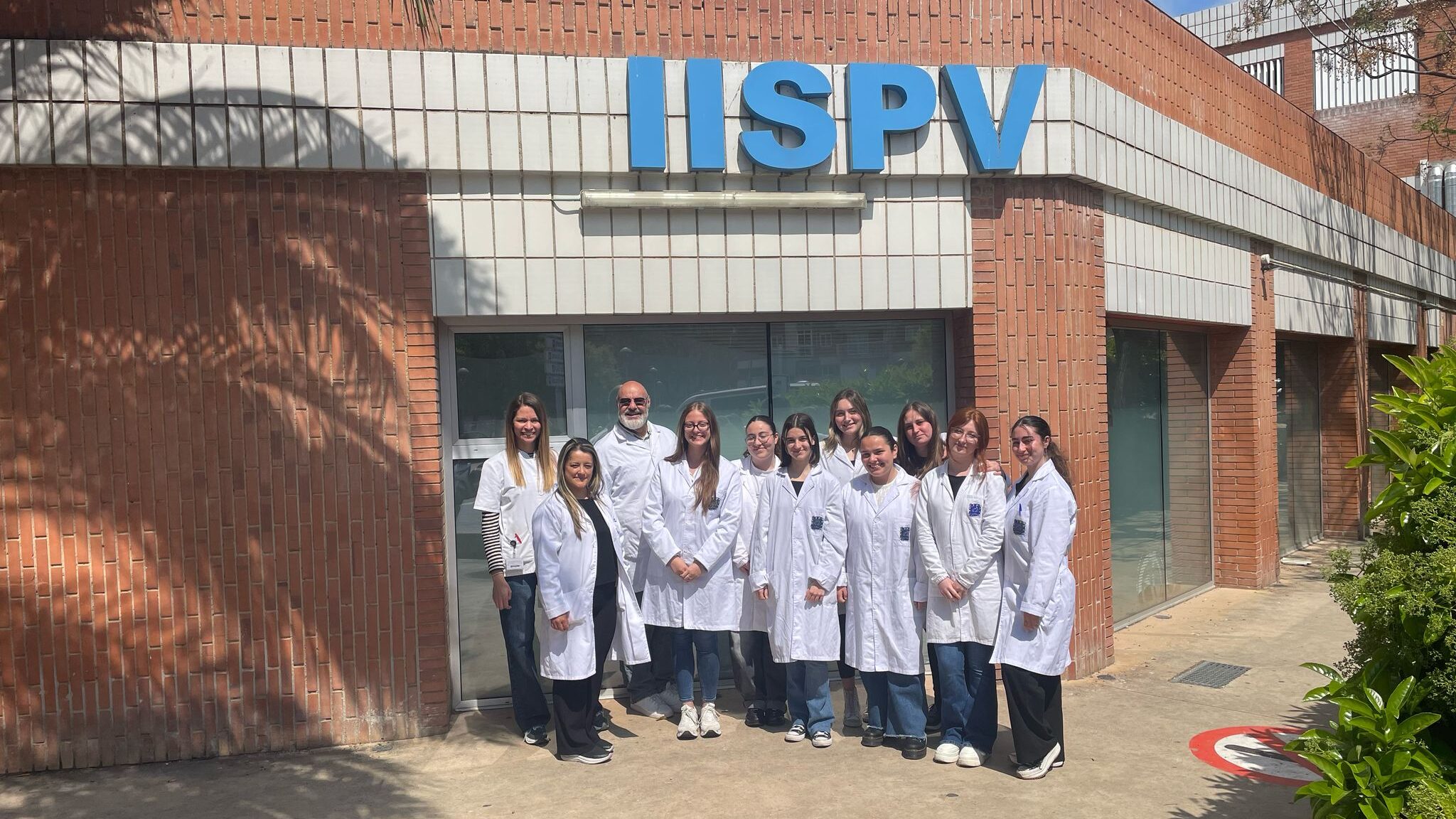
The Cytometry Platform of the Institut d’Investigació Sanitària Pere Virgili (IISPV) continues to advance the understanding of flow cytometry through training sessions for students. Recently, the unit organized and conducted two courses for students from Universitat Rovira i Virgili (URV) and the Institut Cal·lípolis of Tarragona. In the first case, it was the third edition of the Basic Course in Flow Cytometry, aimed at students from the Degree in Biotechnology, the Degree in Computer Engineering and Biotechnology, and the Double Degree in Biochemistry and Molecular Biology at URV.
The students received both theoretical and practical training during their visit to the Cytometry Unit, where they observed the processing of peripheral blood samples. They were able to distinguish cell populations based on size, complexity, and the use of different light-reactive chemical compounds (fluorochromes).
As for the second group of students, who are pursuing a Higher Degree in Clinical and Biomedical Laboratory Studies at the Cal·lípolis Institute, they attended the fifth edition of the Basic Course in Flow Cytometry. The aim of the training was to strengthen the connection between students in the health sciences field and the IISPV. The course consisted of a theoretical and practical session, which also included the analysis of a peripheral blood sample.
The students thus had the opportunity to participate in a training session where they became familiar with the basic concepts of the technique while observing the live processing of a peripheral blood sample labeled with fluorochromes.