

A study by IRB Catalunya Sud (formerly IISPV) and Hospital Universitari Joan XXIII de Tarragona has discovered that these vesicles act differently depending on tumour aggressiveness, opening new possibilities for future therapeutic strategies.
Prostate cancer is the most common tumour in men in many Western countries. In the Tarragona region, nearly 670 new cases are diagnosed each year, and the number exceeds 30,000 at the national level. Although many tumours grow slowly, others can progress and spread, so understanding the factors that drive this aggressiveness is essential to improve patient outcomes.
In this context, researchers from the Grup de Recerca en Biomarcadors de Malalties i Mecanismes Moleculars (DIBIOMEC) at the Institut de Recerca Biomèdica Catalunya Sud (IRB Catalunya Sud, formerly IISPV), in collaboration with the Urology and Pathology Departments of Hospital Universitari Joan XXIII de Tarragona, have made an important step forward. Their recently published study shows for the first time that extracellular vesicles (small particles released by cells) from the adipose tissue surrounding the prostate (periprostatic adipose tissue, PPAT) modulate the behaviour of tumour cells differently depending on cancer risk level.
The research, led by Dra. Matilde R. Chacón and Dr. Xavier Ruiz-Plazas, and carried out by a multidisciplinary team, provides a new perspective on how the tumour microenvironment — particularly periprostatic fat — “communicates” with cancer and influences its evolution.
First, the study reveals risk‑dependent effects. Vesicles from periprostatic adipose tissue of patients with low‑risk prostate cancer mainly stimulate tumour cell proliferation. In contrast, vesicles from patients with high‑risk tumours do not promote proliferation, but they do increase the migration capacity of cancer cells and stimulate angiogenesis (the formation of new blood vessels), both of which are key processes in tumour progression and spread.
The vesicles also affect the tumour microenvironment. Besides acting on cancer cells, they influence other surrounding cells. Low‑risk vesicles promote a pro‑inflammatory and immunosuppressive profile in macrophages (immune cells), which may help create a supportive environment for early‑stage tumours.
Another important finding is the activation of signalling pathways, as the observed effects are linked to the activation of key molecular routes in cancer.
This discovery shows that periprostatic adipose tissue is not just a passive structure but an active and dynamic player that modulates prostate cancer behaviour depending on disease aggressiveness. Extracellular vesicles from this tissue emerge as promising therapeutic targets for future strategies aimed at interfering with communication between the tumour and its microenvironment, especially in cases with a higher risk of progression.
Although these results come from in vitro models and further studies will be needed in more complex systems, this research represents a significant step forward in understanding prostate cancer biology and opens a promising avenue for translational research.
Link to the scientific publication:
Arreaza-Gil V. et al. Periprostatic adipose tissue-derived extracellular vesicles modulate prostate cancer cell behaviour in vitro according to tumour grade. Mol Med (2026).
PubMed: https://pubmed.ncbi.nlm.nih.gov/41566212/
DOI: 10.1186/s10020-026-01422-7
This study is a step forward in the search for more accurate diagnostic and prognostic tools for prostate cancer
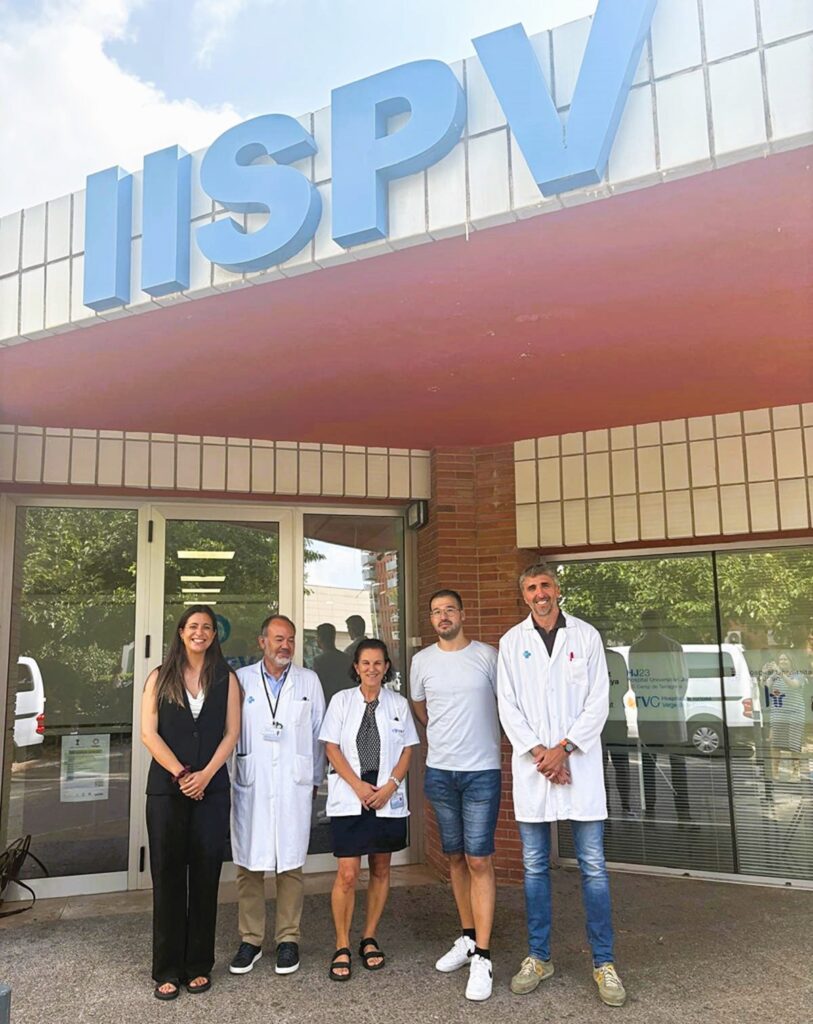
Researchers from the Institut d’Investigació Sanitària Pere Virgili (IISPV), in collaboration with the Urology Department at the Joan XXIII University Hospital in Tarragona, have made promising progress in improving the diagnosis and monitoring of prostate cancer. The study, led by Matilde Rodríguez Chacón and Xavier Ruiz-Plazas, a specialist from the Urology Department at the same hospital, both members of the Research Group on Disease Biomarkers and Molecular Mechanisms (DIBIOMEC), was recently published in the Journal of Urology, the official journal of the American Urological Association (AUA). The research explored a panel of biomarkers found in semen samples. In the cases studied, the results were promising when combined with traditional clinical variables. Preliminary data suggest that this approach could be useful in several clinical situations, including early detection, identifying patients at higher risk of recurrence after curative treatment, and monitoring patients under active surveillance for this type of cancer.
Prostate cancer is the most common tumor among men in the Tarragona region, with around 670 new cases each year. At the national level, more than 30,000 cases are diagnosed annually, making it one of the leading causes of cancer-related death in men. This advancement, co-authored by Dr. Alves-Santiago and Dr. Altuna-Coy, both members of the DIBIOMEC group, is an important step toward personalized medicine in urology. It offers more precise tools for early detection and individualized clinical decision-making. Although more prospective studies with a larger number of patients are needed, the results so far are very promising.
Link to the scientific publication: Alves-Santiago M, Altuna-Coy A, López-Ribelles P, Arreaza-Gil V, Segarra-Tomás J, Ascaso-Til H, Garcia-Fontgivell JF, Sánchez-Martín S, Bernal-Escoté X, Ruiz-Plazas X, Chacón MR. A Semen Panel Signature Comprising sTWEAK Cytokine Levels and Expression of exomiR-221-3p and exomiR-222-3p for Assessing Prostate Cancer Prognosis, Diagnostic Utility, and Detection of Upgrading During Active Surveillance. J Urol. 2025 Aug 27:101097JU0000000000004749. doi: 10.1097/JU.0000000000004749. Epub ahead of print. PMID: 40863180.
This Wednesday, June 11, World Prostate Cancer Day, the importance of ensuring early detection is highlighted. The IISPV conducts research to find more effective and less invasive ways to predict advanced stage tumors and treat them earlier
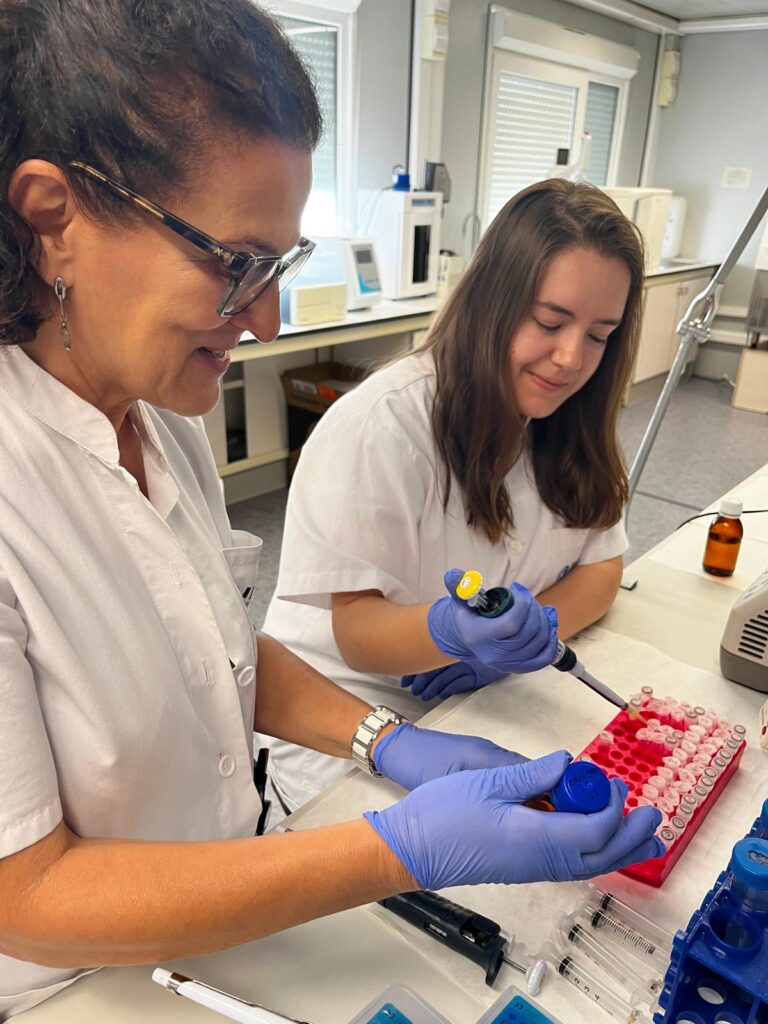
Prostate cancer is the most common tumor among men in the province of Tarragona. Each year approximately 670 new cases are diagnosed there, a figure that represents almost one in four male cancers. On the commemoration of World Prostate Cancer Day, this Wednesday, June 11, the Institut d’Investigació Sanitària Pere Virgili (IISPV) recalls the importance of ensuring early detection of this type of cancer. In this sense, the IISPV has several active lines of research to better understand prostate cancer and to find more effective and less invasive ways to predict the prognosis of tumors and treat them in advance. This is highlighted by Dr. Matilde Rodríguez Chacón, head of the Disease Biomarkers and Molecular Mechanisms research group (DIBIOMEC) of the IISPV at the Hospital Universitari Joan XXIII de Tarragona, to whom the Spanish Association Against Cancer has recently granted a grant to develop a project focused on creating a new predictive tool for aggressive prostate cancer.
The main lines of research open to the group are, on the one hand, to find a safer and more accurate prognosis through innovative biomarkers – in this case through a novel test in semen – and, on the other, to delve into the hidden role of the fat that surrounds the prostate, which can act as a source of energy for the tumor, favoring its growth and aggressiveness. “What is of concern is not so much the presence of this fat on its own, but when it is part of a context of obesity or overweight. This does not mean that a person with obesity will necessarily develop prostate cancer, but it does mean that, if he or she does develop it, it is more likely to be more aggressive,” explains Dr. Rodríguez Chacón. For this reason, “controlling weight and maintaining healthy habits is key to reducing risks and facilitating a better prognosis”.
A safer and more reliable prognosis
Since 2016, the research group has been working closely with the Urology Service of the Joan XXIII Hospital in Tarragona on the development of a test designed to detect the aggressiveness of prostate cancer by analyzing biomarkers in liquid semen biopsy, with an accuracy of 90.9% to classify the aggressiveness of the tumor and allow its early treatment. Since its inception, this test has advanced significantly. Initially, seven biomarkers were considered, but thanks to the evolution of the group’s research, it has been reduced to three without losing prognostic efficacy. In addition, an algorithm has been designed that allows the application of these determinations in semen of the biomarkers in the clinical setting, with the aim of facilitating prognosis and personalization of treatment in affected patients. Now, the challenge for the research group is to validate the test with a larger number of samples through multicenter studies, a “necessary step, among others, to consolidate its use in routine medical practice”.
This research aims to reduce unnecessary biopsies, using less invasive and more reliable methods to detect aggressive tumors, as well as to offer personalized strategies for patients with non-aggressive tumors that do not require immediate surgery.
According to data from the Asociación Española contra el Cáncer in 2024, more than 34,000 cases of prostate cancer have been diagnosed in Spain, of which 5,400 were in Catalonia and 616 in Tarragona. It is estimated that between 2024 and 2029 there will be close to 150,000 new cases in Spain, with a notable increase among men under 70 years of age. Only 40% of men between 50 and 65 years of age in the province undergo regular check-ups, and this figure improves among those over 65, reaching 55%, although, according to experts, it is still insufficient.
The possible reason for the increase in cases in younger men, under 70 years of age, could be multifactorial. According to Dr. Rodríguez Chacón, this could be due to changes in lifestyle, improvements in diagnosis and early detection programs that identify tumors in earlier stages and in younger patients, as well as to environmental factors and genetic predisposition.