Two webinars to discover how the microbiome and the maternal brain influence our health
MÉS INFORMACIÓ
Two webinars to discover how the microbiome and the maternal brain influence our health
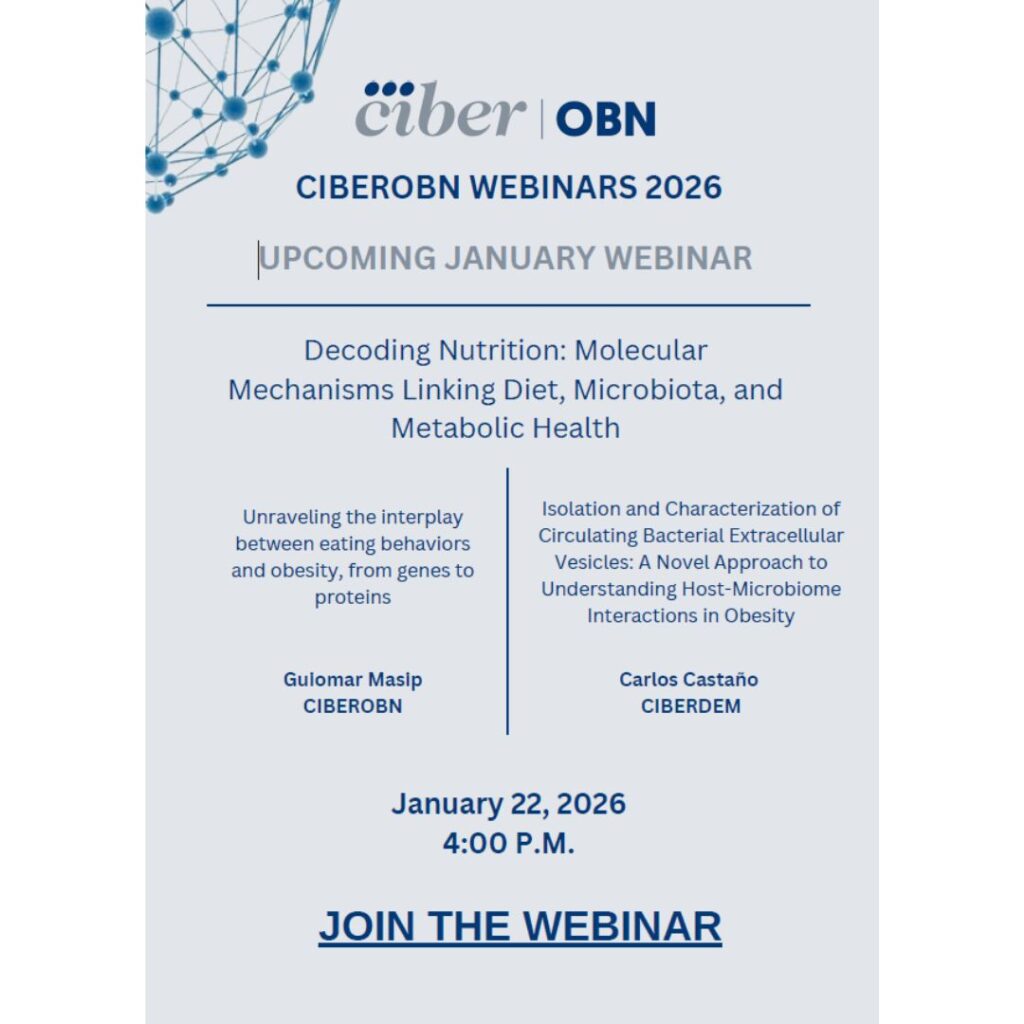
This Thursday, 22 January at 4 p.m., Dr Carlos Castaño, a postdoctoral researcher, will take part in the CIBEROBN Webinars 2026 series with a presentation focused on an emerging topic in the field of host–microbiome interaction. His talk, titled “Isolation and Characterization of Circulating Bacterial Extracellular Vesicles: A Novel Approach to Understanding Host–Microbiome Interactions in Obesity”, will explain how bacterial extracellular vesicles found in the bloodstream may offer new tools to understand the molecular mechanisms that link the microbiome to obesity. This innovative approach opens the door to new research lines and possible diagnostic or therapeutic applications.
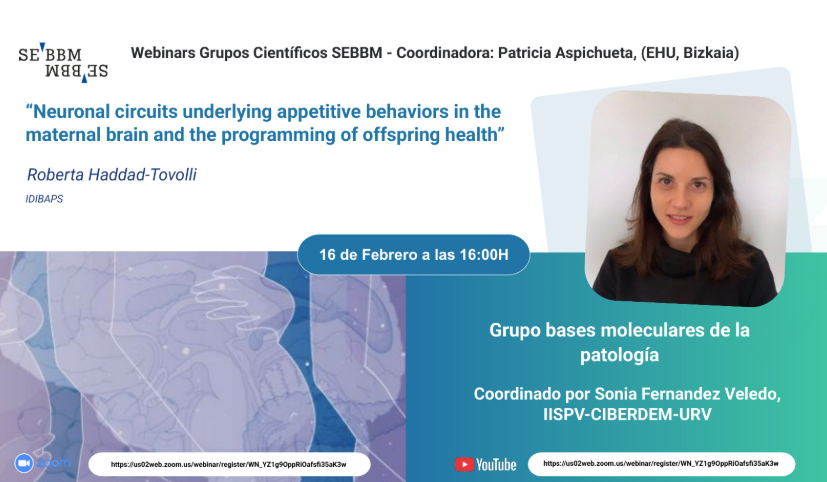
Later, on 16 February at 4 p.m., the SEBBM group “Molecular Bases of Pathology”, coordinated by Dr Sonia Fernández‑Veledo, will organise another webinar dedicated to the neurobiology of eating behaviour. Researcher Roberta Haddad‑Tovolli (IDIBAPS) will give the lecture “Neuronal circuits underlying appetitive behaviors in the maternal brain and the programming of offspring health”. The session will explore how the neuronal circuits of the maternal brain regulate food‑related behaviours and how these processes may influence the long‑term health of the offspring.
In the coming months, the scientific community interested in biomedical research and the molecular basis of disease will have the opportunity to attend two high‑level online sessions led by experts in their fields.
This Thursday, 22 January at 4 p.m., Dr Carlos Castaño, a postdoctoral researcher, will take part in the CIBEROBN Webinars 2026 series with a presentation focused on an emerging topic in the field of host–microbiome interaction. His talk, titled “Isolation and Characterization of Circulating Bacterial Extracellular Vesicles: A Novel Approach to Understanding Host–Microbiome Interactions in Obesity”, will explain how bacterial extracellular vesicles found in the bloodstream may offer new tools to understand the molecular mechanisms that link the microbiome to obesity. This innovative approach opens the door to new research lines and possible diagnostic or therapeutic applications.
Later, on 16 February at 4 p.m., the SEBBM group “Molecular Bases of Pathology”, coordinated by Dr Sonia Fernández‑Veledo, will organise another webinar dedicated to the neurobiology of eating behaviour. Researcher Roberta Haddad‑Tovolli (IDIBAPS) will give the lecture “Neuronal circuits underlying appetitive behaviors in the maternal brain and the programming of offspring health”. The session will explore how the neuronal circuits of the maternal brain regulate food‑related behaviours and how these processes may influence the long‑term health of the offspring.
The webinar is part of the growing interest in understanding how neurobiological and environmental factors during pregnancy and breastfeeding affect development and future health.
Both webinars are an excellent opportunity to update knowledge, discover new research perspectives and connect with the specialised scientific community.
In 2025, the Institut d’Investigació Sanitària Pere Virgili (IISPV) celebrates 20 years of promoting research in health and biomedicine across the region. With more than 600 professionals and 38 research groups, the institute has become a key reference in transferring scientific knowledge to clinical practice. Years after its foundation, it continues working to improve the health and well-being of the population.
We use cookies on our website to give you the most relevant experience by remembering your preferences and repeat visits. By clicking “Accept All”, you consent to the use of ALL the cookies. However, you may visit "Cookie Settings" to provide a controlled consent.
This website uses cookies to improve your experience while you navigate through the website. Out of these, the cookies that are categorized as necessary are stored on your browser as they are essential for the working of basic functionalities of the website. We also use third-party cookies that help us analyze and understand how you use this website. These cookies will be stored in your browser only with your consent. You also have the option to opt-out of these cookies. But opting out of some of these cookies may affect your browsing experience.
Necessary cookies are absolutely essential for the website to function properly. These cookies ensure basic functionalities and security features of the website, anonymously.
Functional cookies help to perform certain functionalities like sharing the content of the website on social media platforms, collect feedbacks, and other third-party features.
Performance cookies are used to understand and analyze the key performance indexes of the website which helps in delivering a better user experience for the visitors.
Analytical cookies are used to understand how visitors interact with the website. These cookies help provide information on metrics the number of visitors, bounce rate, traffic source, etc.
Advertisement cookies are used to provide visitors with relevant ads and marketing campaigns. These cookies track visitors across websites and collect information to provide customized ads.




 Facebook
  Mail
Mail  WhatsApp