

ICS and AQuAS organize a session on June 2 to prepare candidates for the research career awards with innovative tools for personal presentation.

The Institut Català de la Salut (ICS) and the Agència de Qualitat i Avaluació Sanitàries de Catalunya (AQuAS) are organizing a training session on narrative CVs, to be held next Monday, June 2, from 3 to 5 pm, in which attendees will become familiar with what a narrative CV is and the main differences with the traditional one, being able to analyze experiences of using the narrative CV in different evaluation processes and develop the necessary skills to write the CV in a narrative way.
The training is mainly aimed at those people who want to apply for the Premis a la Trajectòria Investigadora, which rewards those who have contributed to the development of ICS research. Registration is now open, with a form to fill in, and places are limited.
The AQuAS Research team has prepared an infographic on how to write a health impact narrative, with the basic information to prepare the application for the Research Career Achievement Awards.
The unit’s objective is to provide an in-depth understanding of flow cytometry
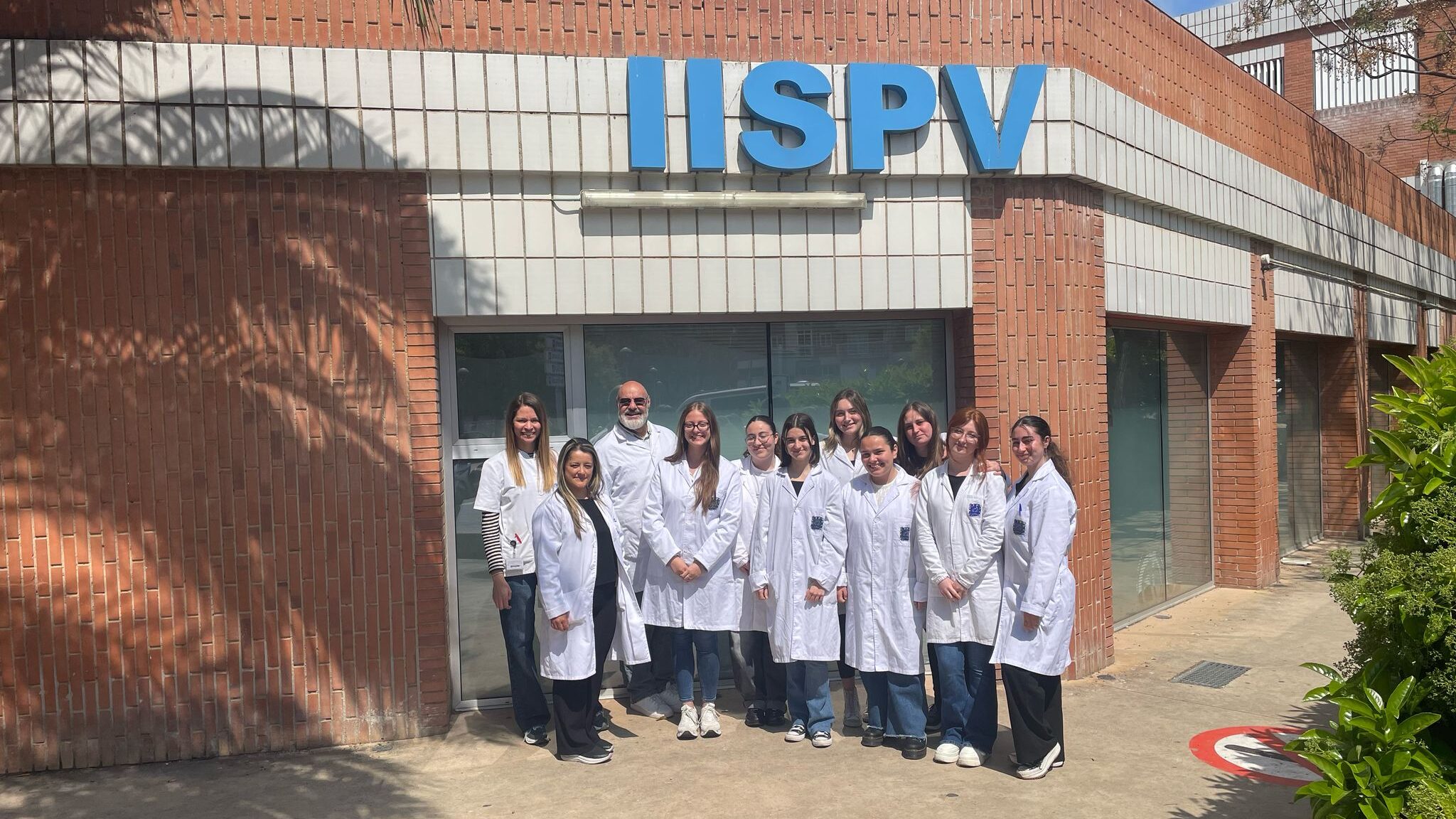
The Cytometry Platform of the Institut d’Investigació Sanitària Pere Virgili (IISPV) continues to advance the understanding of flow cytometry through training sessions for students. Recently, the unit organized and conducted two courses for students from Universitat Rovira i Virgili (URV) and the Institut Cal·lípolis of Tarragona. In the first case, it was the third edition of the Basic Course in Flow Cytometry, aimed at students from the Degree in Biotechnology, the Degree in Computer Engineering and Biotechnology, and the Double Degree in Biochemistry and Molecular Biology at URV.
The students received both theoretical and practical training during their visit to the Cytometry Unit, where they observed the processing of peripheral blood samples. They were able to distinguish cell populations based on size, complexity, and the use of different light-reactive chemical compounds (fluorochromes).
As for the second group of students, who are pursuing a Higher Degree in Clinical and Biomedical Laboratory Studies at the Cal·lípolis Institute, they attended the fifth edition of the Basic Course in Flow Cytometry. The aim of the training was to strengthen the connection between students in the health sciences field and the IISPV. The course consisted of a theoretical and practical session, which also included the analysis of a peripheral blood sample.
The students thus had the opportunity to participate in a training session where they became familiar with the basic concepts of the technique while observing the live processing of a peripheral blood sample labeled with fluorochromes.