

A study of 746 older people followed for six years identifies a “microbial signature” associated with this dietary pattern and more favourable cognitive ageing
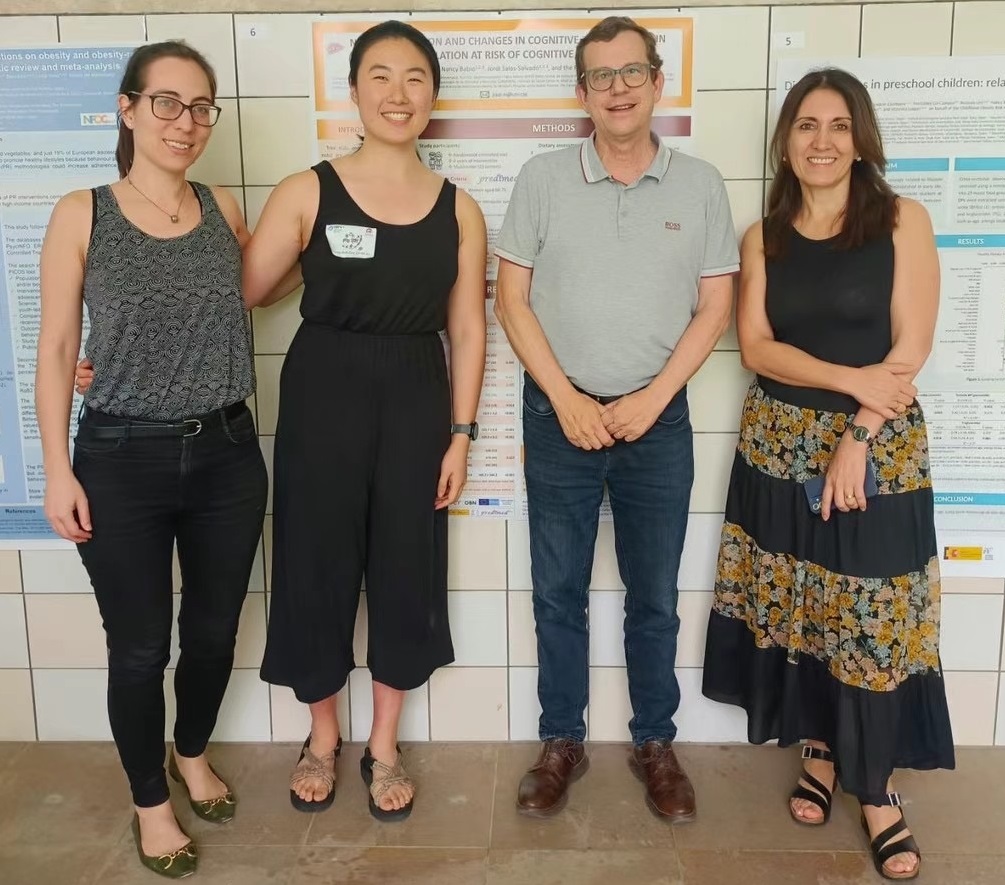
Following a Mediterranean diet not only benefits the heart and metabolism, but could also help preserve cognitive function as ageing progresses. This is according to research led by the Rovira i Virgili University (URV), the IISPV and CIBERobn, which shows how this dietary pattern is associated with a healthier gut microbiota and slower cognitive decline in older adults with overweight or obesity and metabolic syndrome.
The study, published in the journal BMC Medicine, analysed data from 746 older adults at high cardiometabolic risk, who were followed for six years. The research team assessed adherence to the Mediterranean diet, the composition of the gut microbiota and the progression of cognitive function over time. The results indicate that those who most faithfully followed this dietary pattern had a more favourable gut microbiota and a more positive cognitive trajectory.
One of the most innovative aspects of the work is the identification of a “microbial fingerprint” characteristic of the Mediterranean diet. This new biomarker, based on the presence and abundance of certain gut bacteria associated with this type of diet, is also linked to slower cognitive decline. According to the authors, this finding provides new clues about the biological mechanisms that explain the benefits of the Mediterranean diet on the brain.
Eix intestí-cervell
Cognitive function includes abilities such as memory, attention, learning, language and decision-making, which are essential for maintaining autonomy in everyday life. In parallel, the gut microbiota is composed of trillions of bacteria that are involved in key processes such as digestion, immunity and the production of substances that influence the body’s functioning. In recent years, research has revealed the existence of the so-called gut-brain axis, a bidirectional communication system through which intestinal microorganisms can produce compounds that reach the brain and affect its functioning.
“Aquest estudi demostra que la microbiota intestinal és una peça clau en els beneficis cognitius de la dieta mediterrània”, explica Jiaqi Ni, primera autora del treball i investigadora predoctoral de la URV. “Els nostres resultats suggereixen que alguns bacteris intestinals associats a una major adherència a aquest patró alimentari podrien protegir davant del deteriorament cognitiu”.
En la mateixa línia, el catedràtic de la URV Jordi Salas-Salvadó, director de l’estudi, destaca que “identificar una empremta microbiana associada a la dieta mediterrània obre noves oportunitats per dissenyar intervencions nutricionals o microbianes orientades a promoure un envelliment cognitiu saludable”. De la seva banda, les investigadores del Departament de Bioquímica i Biotecnologia de la URV Nancy Babio i Stephanie K. Nishi subratllen la rellevància dels resultats en un context d’envelliment poblacional i augment de la prevalença de la demència, i apunten que millorar la qualitat de la dieta és una estratègia senzilla i accessible amb beneficis reals per a la salut cerebral.
El treball ha estat liderat per la investigadora predoctoral Jiaqi Ni i dirigit per Jordi Salas-Salvadó, Nancy Babio i Stephanie K. Nishi, membres de la Unitat de Nutrició Humana del Departament de Bioquímica i Biotecnologia de la URV, amb la col·laboració d’investigadors del consorci PREDIMED-Plus. L’estudi s’emmarca en una recerca multicèntrica que contribueix a aprofundir en la relació entre alimentació, microbiota intestinal i salut cerebral al llarg de l’envelliment.
Referència bibliogràfica: Ni J, Hernández-Cacho A, Nishi SK, Babio N, Belzer C, Konstati P, Vioque J, Corella D, Castañer O, Vidal J, Moreno-Indias I, Torres-Collado L, Coltell O, Fitó M, Ruiz-Canela M, Wang DD, Tinahones FJ, Salas-Salvadó J. Mediterranean diet, gut microbiota, and cognitive decline in older adults with obesity/overweight and metabolic syndrome: a prospective cohort study. BMC Med. 2025 Dec 1;23(1):669. doi: 10.1186/s12916-025-04488-y.