
The donation will support the Institute’s research lines on diabetes, especially those focused on prevention, diagnosis, and treatment
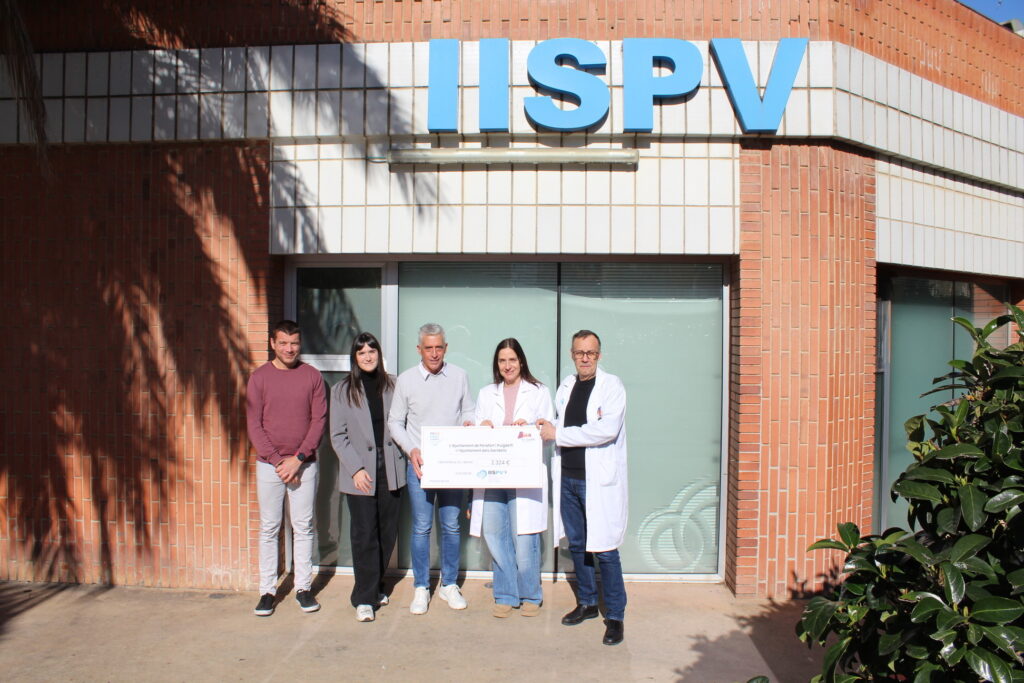
The town councils of Perafort and Puigdelfí and Els Garidells have donated the funds raised during the charity walk ‘Take a Step Against Diabetes’ to the Pere Virgili Health Research Institute (IISPV). The total amount, €2,324, will be used to support research on diabetes, particularly in the areas of prevention, diagnosis, and treatment of this and other metabolic diseases. The event, organised by both councils, took place on 23 November 2025 and celebrated its 10th edition, coinciding with the 20th anniversary of the Institute.
During the ceremony to hand over the symbolic cheque, several representatives of the organising institutions attended: the event’s promoter, Sergi Vernet; the Sports Councillor of Perafort, Xavi Prim; and the Housing and Social Welfare Councillor of Els Garidells, Marta Duque. Representing the IISPV were the director and leader of the Diabetes and Associated Metabolic Diseases Group (DIAMET), Joan Vendrell, and also DIAMET group leader, Sonia Fernández Veledo. The DIAMET group is the beneficiary of the funds, which will help continue its research projects in the field of diabetes.
The donation was made possible thanks to the participation of local residents and the support of organisations and businesses in the area. As highlighted during the cheque presentation by both the organising councils and IISPV representatives, this contribution “strengthens the collective commitment to diabetes research” and shows the “social awareness of a disease that has a major impact on the region”. The aim of the walk is not only to support research but also to promote healthy lifestyle habits.
Over its 10 editions, the charity walk ‘Take a Step Against Diabetes’ has raised a total of €11,000, which has been used to support ongoing diabetes research projects at the Institute.
In Spain, 17,241 sudden cardiac deaths are recorded every year
The incidence of sudden cardiac death (SCD) in the Mediterranean area is one third lower than in countries in northern Europe and America. This is the conclusion of a study co‑led by the Pere Virgili Health Research Institute (IISPV) and the Catalan Medical Emergency System (SEM), with the participation of the Institute of Legal Medicine and Forensic Sciences of Catalonia (IMLCFC), Joan XXIII University Hospital of Tarragona, Sant Joan University Hospital of Reus, Xarxa Santa Tecla, IDIAP Jordi Gol, Rovira i Virgili University, and the Catalan Health Institute. The study, recently published in the international journal BMJ Global Health, analyses the factors that explain the lower impact of sudden cardiac death in the Mediterranean region.
According to the study (Epidemiology of sudden cardiac arrest in the western Mediterranean area based on a prospective registry), 70% of sudden deaths are caused by cardiac conditions. Chronic coronary disease is identified as the main cause of sudden death, followed by acute coronary disease and cardiomyopathies. In addition, 15% of sudden deaths are due to non‑cardiac cardiovascular causes, such as pulmonary thromboembolism or intracranial haemorrhage. The remaining 15% are related to non‑cardiovascular causes, such as digestive bleeding or infections. Alfredo Bardají, cardiologist at Joan XXIII University Hospital, highlights that “this study found that acute myocardial infarction as a cause of sudden cardiac death is decreasing, thanks to improvements in early treatment”.
Regarding the possible prevention of sudden death, Youcef Azeli, principal investigator of the study, SEM doctor, physician at Sant Joan University Hospital of Reus and head of the IISPV research group in emergencies, explains that “only one third of patients have a previous history of heart disease, which makes prediction difficult. Also, in 50% of cases, cardiac arrest occurs without previous symptoms, which makes treatment harder”. Even so, the study shows that one in five patients had a medical consultation in the four weeks before the event, which highlights the need to work on medium‑term prevention strategies to improve the detection of patients at risk.
This research is also relevant for two additional reasons. First, it involved up to six institutions, which made it possible to gather information from many different sources. In this regard, the participation of the Institute of Legal Medicine and Forensic Sciences of Catalonia (IMLCFC), part of the Department of Justice and Democratic Quality, is especially important. Its director, Eneko Barbería, points out that “including forensic analyses and data allows us to obtain a complete picture of sudden cardiac death and makes this study unique in the Mediterranean area and in Europe”.
Second, this is the first study that provides real data on the incidence of sudden death in Catalonia and Spain, thanks to the wide participation of institutions that contributed information. According to the Catalonia Cardiac Arrest and Sudden Death Registry (RAIMCAT), 2,700 cases are recorded every year in Catalonia and initially attended by SEM, which means 7 cases per day. In Spain as a whole, the annual number is 17,241 cases, or 47 cases per day. This study, unique in Europe, shows that sudden cardiac death is one of the most important causes of death in Spain, just after lung cancer.
The survival rate after sudden cardiac arrest is only 10%. Cases with previous chest pain or where an automated external defibrillator (AED) is used before SEM arrives have a better chance of survival. For this reason, in the presence of warning signs such as chest pain, or when witnessing a sudden loss of consciousness, it is essential to recognise the situation quickly, start high‑quality chest compressions, and use an AED as soon as possible.
This study, funded by the Catalan Resuscitation Council (CCR), has made it possible to identify the cause of death in a higher percentage of cases than other published studies. Research like this, with high‑quality registries on sudden cardiac death, helps advance precision medicine, prevention, and treatments that improve patient care.
Reference: Azeli, Y., Barbería, E., Solà-Muñoz, S., Landín, I., Fernández, A., Rey-Reñones, C., García-Gual, C., Gomez-Tortosa, A., Granado-Font, E., Fernandez-Sender, L., García-Vilana, S., Bonet, G., Jimènez-Fàbrega, X., & Bardaji, A. (2025). Epidemiology of sudden cardiac arrest in the western Mediterranean area based on a prospective registry. BMJ global health, 10(11), e020462. https://doi.org/10.1136/bmjgh-2025-020462
This tool gathers detailed nutritional information on 850 products from 42 brands available in the main supermarkets in Spain. Its aim is to provide dietetics, nutrition, paediatrics and other health professionals with a reliable and updated source of information about the composition of these foods. This allows them to accurately assess nutrition during the first years of life and offer recommendations that promote a healthier and more sustainable diet. In addition, the results can serve as a basis for designing more effective food and regulatory policies.
According to Nancy Babio, researcher at the Human Nutrition Unit of the URV and coordinator of the project, “this database is a key step to provide health professionals with objective and evidence‑based information, in a context where the offer of commercial products for young children is growing quickly and does not always follow public health criteria”.
The results of the analysis, published in the scientific journal European Journal of Pediatrics, show worrying data. Besides confirming that only 20% of the products analysed meet all the nutritional profile and advertising criteria recommended by the WHO, it also warns that 60% of the food contains excessive amounts of sugar, and 99% of fruit purées would require a “high in sugar” warning label. In fact, none of the foods analysed should be advertised according to WHO guidelines.
The analysis also shows that 30% of the products include added sugars or sweeteners, such as honey or concentrated juices, and that none of the products meet all the WHO criteria for commercial promotion. Moreover, 98% display unauthorised claims or promotional messages.
“These results highlight the urgent need to improve regulation, both in the formulation and in the advertising of foods aimed at young children. At the moment, this is governed by a co‑regulation code (PAOS) that is not legally binding and has not worked as expected,” warns Roser Martí, president of CODINUCAT.
The Baby & Toddler Food Composition Database – InfantBase is a tool designed both for professional use and for political decision‑making.
This tool is part of the PRINUT project (Early Childhood: Nutritional Analysis and Regulation of Commercial Foods), which is aligned with public health strategies aimed at promoting healthy and safe eating during early childhood, following WHO recommendations and the PAAS (Comprehensive Plan for Health Promotion through Physical Activity and Healthy Eating) of the Government of Catalonia.
“As scientists and health professionals, we believe we have the responsibility to translate scientific evidence into effective policies that protect children’s health. We hope to receive institutional support to move forward in this direction,” concludes Babio.
The Institut d’Investigació Sanitària Pere Virgili (IISPV) held its first PostDoc Day on Tuesday, 16 December, with the aim of giving visibility to the research carried out by the Institute’s postdoctoral researchers.
The award winners of the day were Francisco Algaba Chueca, who received the First Prize for Best Short Presentation; Laia Just Borràs, who received the First Prize for Best Flash Presentation; and Bernat Ballvè Gelonch, who received the First Prize for Best Question.
Succipro, a spin-off created in 2022 as a result of research from IRB CatSud (the new name that the current IISPV will adopt from 2026), has joined the business and innovation platform Catalonia.health. This step will help the company connect with other organisations in the Catalan biomedical sector, create synergies, share knowledge and speed up the development of its products.
Succipro focuses on developing new therapeutic strategies based on succinate modulation, with the aim of addressing inflammatory and metabolic diseases that affect millions of people. All of this is explained in this video.
At the moment, Succipro is developing a drug for the treatment of Inflammatory Bowel Disease (IBD). It is currently in the preclinical phase and shows very promising initial results. Succipro’s drugs also have the potential to treat other complex diseases of high clinical relevance, such as diabetes or certain types of cancer, where inflammation and metabolism play an important role.
At Succipro, the team works every day to improve the quality of life of people living with these conditions. The company is strongly committed to developing therapies that address real and personalised problems in patients. This approach follows the principles of personalised medicine, designing molecules with proper scientific and methodological validation to solve problems that are not yet fully addressed.
For Succipro, joining Catalonia.health is a “strategic decision that will allow the company to build connections with other organisations in the Catalan biomedical sector”. This collaboration is expected to help create synergies, share knowledge and accelerate the development of its products. This link between science, business and health is seen as essential to position Catalonia as an international reference in biomedicine.
More information: https://www.succipro.com/ https://www.iispv.cat/
The project is supported by the Diputació de Tarragona, which has granted funding of 100,000 euros to carry out the initiative
The Pere Virgili Health Research Institute (IISPV) — which from 2026 will become the Southern Catalonia Biomedical Research Institute (IRB CatSud) — is leading the XISS project to integrate biomedical research and social innovation. The aim of the project is to transform the province’s healthcare system by creating effective connections between biomedical research, technological innovation, and citizen participation, with a direct impact on people’s health and well‑being. This initiative is carried out with the collaboration of the Diputació de Tarragona, which has provided a grant of €100,000 to support its development.
The project has enabled the preliminary studies for the creation of the Southern Catalonia Clinical Research Unit (UiC), which will be located at Sant Joan University Hospital in Reus and coordinated together with the three health regions (Camp de Tarragona, Terres de l’Ebre, and Baix Penedès). This infrastructure will make it possible to develop advanced clinical trials, including phase I oncology studies, as well as multicentre research on cardiovascular, metabolic, infectious, and neurodegenerative diseases.
The UiC will make it easier for patients from rural or geographically dispersed areas to take part in studies, reducing inequalities and increasing access to therapeutic innovation. In addition, data interoperability and the implementation of telemedicine services will ensure equal opportunities in access to clinical trials.
The project covers 184 municipalities and 10 counties in the province of Tarragona, involving local and socioeconomic stakeholders (city councils, hospitals, primary care centres, the university, civil society, patient associations, biotechnology and pharmaceutical companies, business clusters, and start‑ups).
Among the results already achieved are:
An analysis of the Spanish Clinical Studies Registry shows that the province of Tarragona has a much lower concentration of clinical trials than Barcelona (21.89 per million inhabitants compared to 114.89). The XISS project addresses this need by ensuring a more balanced distribution of resources and clinical research structures across Catalonia.
The XISS project positions itself as a national reference in translating scientific knowledge into clinical practice, promoting a healthcare system focused on people, the territory, and the reduction of social and geographical inequalities.

Researcher Noelia Ramírez from IISPV took part on November 28 in the Eurecat Reus symposium on epigenetic and metabolic interactions
The researcher from the Pere Virgili Health Research Institute (IISPV), Noelia Ramírez, participated in the 3rd Eurecat Symposium on Epigenetic and Metabolic Interactions, held on November 28 at Eurecat’s headquarters in Reus. Her presentation was part of a talk entitled “Advancing Precision Environmental Health: From comprehensive exposure characterisation to metabolic and epigenetic markers of effect.”
In her conclusions, she explained that environmental exposures are dynamic, come from multiple sources, and are biologically complex. “To address their impact on health, we need integrated and high-resolution approaches that combine chemistry, biology, and data science,” Ramírez said.
She added that the paradigm of Precision Environmental Health integrates “a detailed characterisation of exposure with the evaluation of effects through omics sciences, in order to reveal how specific environmental mixtures influence molecular pathways, identify early biomarkers of susceptibility, and guide more effective prevention strategies.”
An escape room, medical tests and cardiopulmonary resuscitation workshops made the work of IISPV visible. The Servei d’Emergències Mèdiques Generalitat, Ajuntament de Tarragona and the Markets of Tarragona joined the initiative held in the city centre.
Around 450 people took part this Saturday, 22 November, in the city centre of Tarragona in the event ‘La recerca en salut surt al carrer’, organised by Institut d’Investigació Sanitària Pere Virgili (IISPV) as part of its 20th anniversary. Throughout the morning, dozens of people participated continuously in the activities, which were open to everyone. The main goal was to bring citizens closer to the work carried out by the Institute in the region.
Plaça Corsini and the Mercat Central became a large laboratory and a space for scientific outreach, where activities —an escape room, medical tests and resuscitation workshops with a visit to an ambulance— attracted people of all ages.
The escape room ‘Investigate and… help us!’ caught the attention of about 70 people. The medical tests ‘Here we take care of you!’, located inside the Market, worked without interruption, serving up to 100 people. Participants underwent early screenings for diabetes and prediabetes, blood pressure measurements to assess cardiovascular risk, and body composition analysis tests.
As for the cardiopulmonary resuscitation workshops ‘Get motivated and resuscitate!’, they involved professionals from IISPV and the Servei d’Emergències Mèdiques (SEM) of the Generalitat, who carried out simulations with mannequins in the square, teaching how to identify a cardiac arrest and perform intervention manoeuvres. In addition, citizens had the chance to see an SEM ambulance up close, which was displayed in the same square. Around 280 people took part in this activity.
The organisation of the event was supported by the SEM of Generalitat, the Ajuntament de Tarragona and the Mercats de Tarragona.
These microorganisms are essential for the product to meet the international definition of kefir established by WHO and FAO.
Around 80% of the products labelled as “kefir” in Spain do not provide information about the presence of yeasts. These microorganisms are necessary for the product to meet the international definition of kefir set by the Codex Alimentarius, prepared jointly by the World Health Organization (WHO) and the Food and Agriculture Organization (FAO). This is the conclusion of a study led by a research team from the Department of Biochemistry and Biotechnology of the Universitat Rovira i Virgili and the Pere Virgili Health Research Institute (IISPV), presented at the latest congress of the Spanish Federation of Nutrition, Food and Dietetic Societies.
Kefir is a fermented dairy food that differs from other similar products, such as yogurt, because of its mixed fermentation, which is the result of the combined action of lactic acid bacteria, acetic acid bacteria and yeasts. In the study, carried out in the summer of 2025, products labelled as “kefir” were analysed in the main supermarkets of the country, selected according to the market share report of Kantar Worldpanel, which includes national and regional chains and covers more than 56.7% of the market. The labelling of 170 drinkable and spoonable kefirs was evaluated, paying special attention to the explicit declaration of yeasts.
The results showed a great variability in the information provided by manufacturers, which, according to the research team, may cause confusion among consumers and make it difficult to correctly identify the product according to international standards. “In many cases, the name ‘kefir’ is used as a commercial claim, even though the products do not meet the international definition, which requires the presence of yeasts,” explain Lucía Iglesias-Vázquez and Nadine Khoury, researchers of the study.
The authors warn that the current European regulation on food information does not require declaring the presence of microorganisms on food labels. Moreover, in some fermented dairy products it even allows the omission of the list of ingredients, which may reduce transparency and contribute to the trivialisation of a food like kefir, which offers many health benefits.
Faced with this situation, the research team suggests that the industry should adopt clearer and more consistent labelling practices, such as explicitly indicating the presence of bacteria and yeasts. “Moving towards a harmonised European regulation that sets minimum microbiological criteria would be essential to protect the authenticity of kefir and strengthen consumer confidence through a clear list of ingredients,” say Nancy Babio and Jordi Salas, professors and researchers from the Department of Biochemistry and Biotechnology of URV, IISPV and CIBEROBN.
Next Saturday, November 22, the Institute will hold the event ‘La recerca en salut surt al carrer’, which includes an escape room, medical tests, CPR workshops, and a demonstration of how an ambulance works.
The Institut d’Investigació Sanitària Pere Virgili (IISPV) will organize the fun event ‘La recerca en salut surt al carrer’ on Saturday morning, November 22, in the center of Tarragona. This initiative is part of the celebrations for the Institute’s 20th anniversary. It was already held in Reus last October and was very well received, with more than 500 people taking part in the activities. Now, IISPV brings the event to Tarragona, specifically to Plaça Corsini and the Mercat Central. Activities will include an escape room about the Institute, non-invasive medical tests, CPR workshops with mannequins, and a demonstration of how an ambulance works. All activities are free, but participants must register in advance on the IISPV website to join the escape room.
The event is organized in collaboration with the Tarragona City Council, Tarragona Markets, and the Servei d’Emergències Mèdiques (SEM) of the Generalitat. Its goal is to help citizens learn more about the work of this biomedical research institute, which has been operating in southern Catalonia for 20 years. The activities planned are:
Escape room ‘Investiga… I ajuda’ns!’
Four groups of five people will help IISPV stop an attack that aims to sabotage the work of its researchers. Each group will face different challenges to protect the four research areas of IISPV: metabolism and nutrition, oncology, mental health and neurosciences, and infection, immunity and environment. The activity lasts about 45 minutes and requires prior registration. It will take place at Tarragona Espai Comerç”, and the meeting point is the entrance to the Central Market on Cristòfor Colom Street. Time slots are: 10:30, 11:30 and 12:30.
Medical tests ‘Aquí et cuidem!’
Throughout the morning, the interior of Tarragona’s Central Market will host several non-invasive medical tests, available to anyone interested:
Workshops ‘Anima’t i reanima!’
All morning long, Plaça Corsini will host the ‘Anima’t i reanima!’ workshops, led by professionals from IISPV and SEM. Using mannequins, participants will learn how to identify a cardiac arrest and how to perform CPR. They will also get to see how an ambulance works, with one on display in the square.