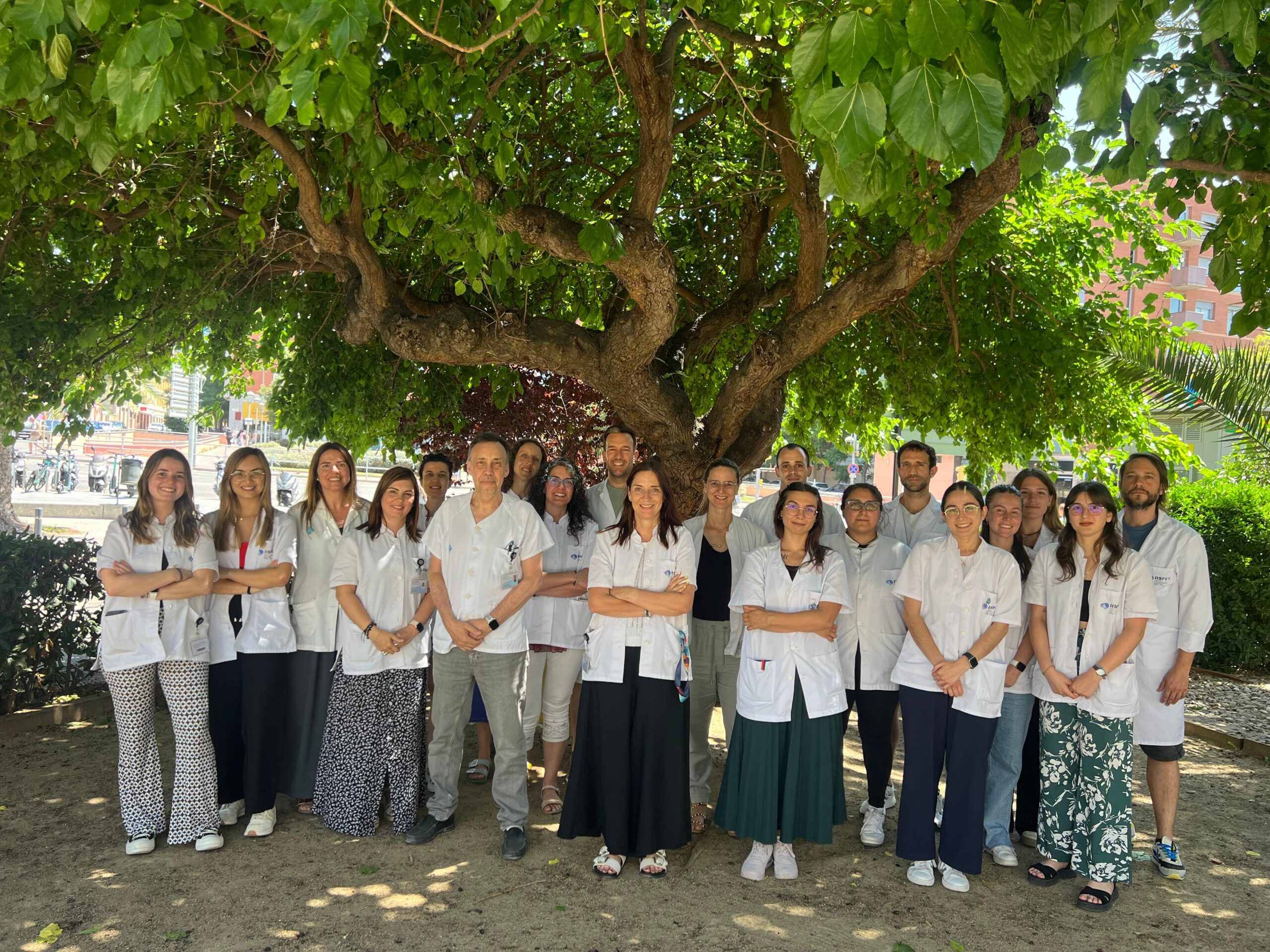

A study has identified, for the first time, non-invasive biomarkers able to detect early stages of hepatic steatosis — also known as fatty liver — in children and adolescents who acquired the Human Immunodeficiency Virus (HIV) at birth. The study, published in Communications Medicine, was coordinated by researchers from the CIBER area of Infectious Diseases (CIBERINFEC) at the Joan XXIII University Hospital of Tarragona – Pere Virgili Health Research Institute (IISPV), and the La Paz University Hospital. The team also included members from Rovira i Virgili University (URV), the La Paz Research Institute (IdiPAZ), and the Autonomous University of Madrid (UAM). This work represents an important step forward in improving the diagnosis of a complication that affects around 30% of this pediatric population.

De izqda. a dcha.: Talía Talía Sainz, Anna Rull y Silvia Chafino.
Hepatic steatosis is common in people living with HIV, and its prevalence among children and young people is also close to 30%. However, non-invasive diagnostic methods used in adults do not work properly in pediatric patients. “Until now, we lacked reliable tools to detect fatty liver in young people with HIV without using invasive techniques. It was essential to find specific biomarkers that could identify the disease in its earliest stages,” explained Anna Rull and Talía Sainz, CIBERINFEC researchers from Joan XXIII University Hospital – IISPV and La Paz Hospital, who led the study.
This study used advanced metabolomic techniques to analyze blood and stool samples from 29 participants, examining circulating fats, bile acids, and intestinal bacteria. This approach allowed the detection of very precise metabolic changes that may indicate liver damage even before symptoms appear.
Among all the molecules studied, two types of triglycerides (TG54:5 and TG56:7) and the bile acid UDCA stood out for their ability to distinguish young people with hepatic steatosis from those without the disease. “The combination of triglyceride TG56:7 and bile acid UDCA greatly improved the ability to separate the two groups,” said Silvia Chafino, CIBERINFEC researcher and first author of the study.
The study also showed that total triglycerides, usually used in adults to evaluate liver function, did not show significant differences between groups in this pediatric cohort. This highlights the importance of exploring specific triglycerides.
The intestinal microbiota was also examined, given its role in transforming bile acids. Although no differences were found between groups, positive correlations were observed between UDCA and the bacterium Collinsella, known to produce this bile acid. This may explain the trends observed, according to the research team.
Finally, the integrated analysis of bile acid profiles identified a subgroup within the control population that showed a pattern similar to children with hepatic steatosis. The researchers emphasized that these results “suggest that early changes in bile acid levels may reflect an initial pathological state, even before clear clinical signs appear. This underlines their promising role in predicting hepatic steatosis, although their possible clinical use should be explored in more detail.”
Article reference: Chafino S, Tarancon-Diez L, Hurtado-Gallego J, Flores-Piñas M, Alcolea S, Olveira A, et al. Metabolomics for searching non-invasive biomarkers of metabolic dysfunction-associated steatotic liver disease in youth with vertical HIV. Commun Med. 2025;5:433.
 Facebook
  Mail
Mail  WhatsApp